people
The ChARIsma group
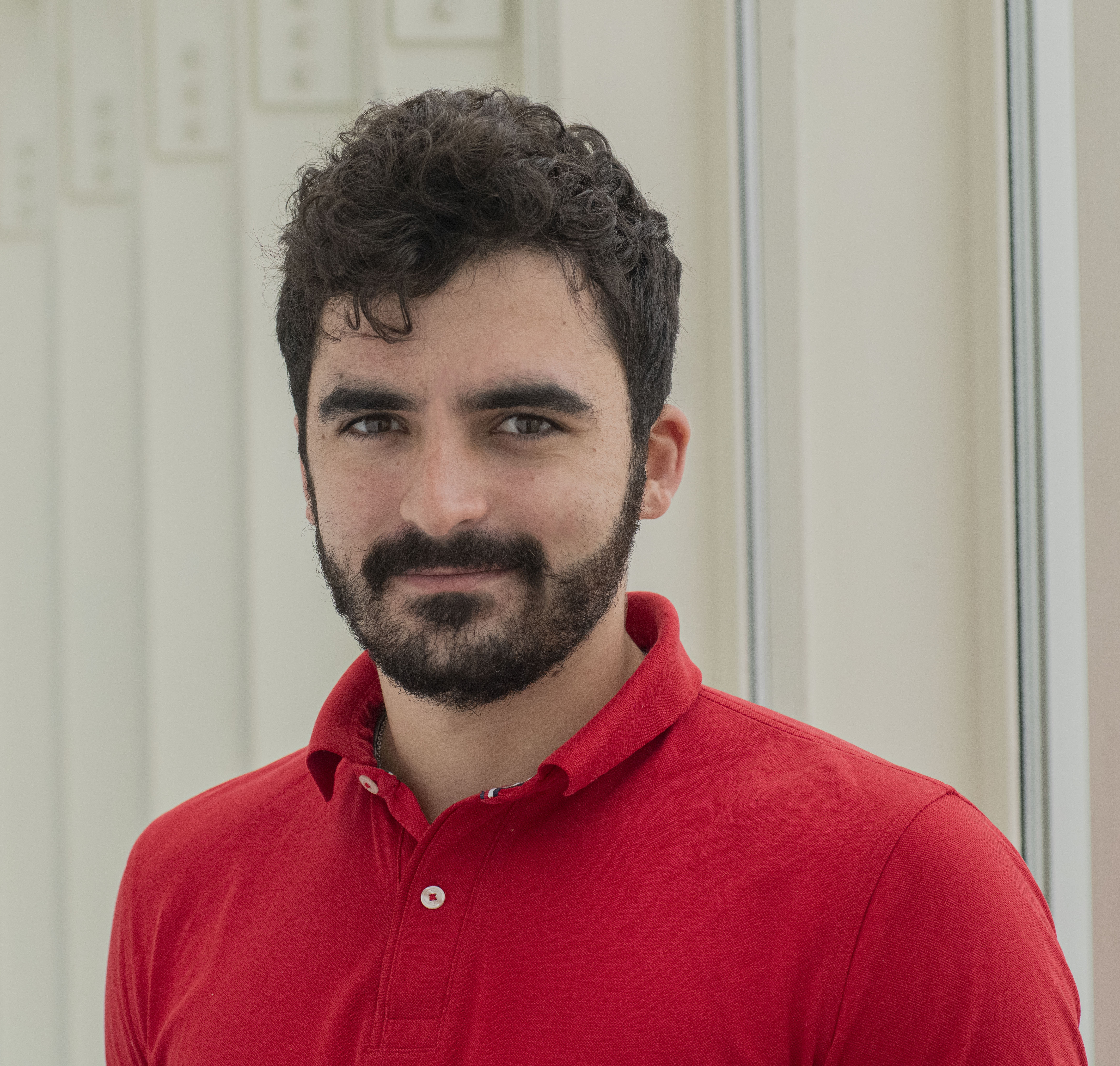
Vasilis, AI specialist
Vasileios Papalampropoulos is a PhD researcher at the Reactor Institute Delft and graduate of LMU Munich. His academic interests center on artificial intelligence in physics and biomedical sciences, with experience in developing high-performance models for early-stage cancer detection using spectroscopic blood data at Attoworld. His research combines deep learning, feature selection, and dimensionality reduction to build interpretable, robust AI systems. With a strong background in physics, quantum and molecular modeling, and statistics, he focuses on using AI to analyze complex datasets, optimize experimental workflows, and advance data-driven discovery in medical diagnostics and radiation science.

Stefanos, Geant4 expert
Stefanos Margis is a PhD researcher within the Nuclear Medicine group at Radboud University Medical Center. His PhD project is project is focused on the dosimetry of Targeted Radionuclide Therapy (TRT) in cancer within the UNRANU consortium, under the supervision of Frank Nijsen, Sandra Heskamp, Mark Konijnenberg, Giulia Tamborino and Konstantinos Chatzipapas. More precisely, his research focuses on the development of computation models based on GEANT4 Monte Carlo code to calculate absorbed doses in 2D and 3D for in-vitro and in-vivo experiments. The aim of his work is to link the simulated absorbed dose with experimental biological data, contributing to a deeper understanding of the relationship between radiation absorbed dose and biological response in targeted radionuclide therapy.

Yirong, Preclinical data processing
Yirong Zhang is a PhD researcher at the Reactor Institute Delft, with a background combining nuclear physics and biomedical imaging. Her research focuses on preclinical SPECT and CT imaging to advance radionuclide therapy. More precisely, her work targets the development of innovative collimator designs and image reconstruction methods that enable accurate characterization of radioactive distributions. The aim of her research is to bridge physics-driven imaging methodology with medical applications, contributing to more accurate dosimetry and more effective cancer treatment.
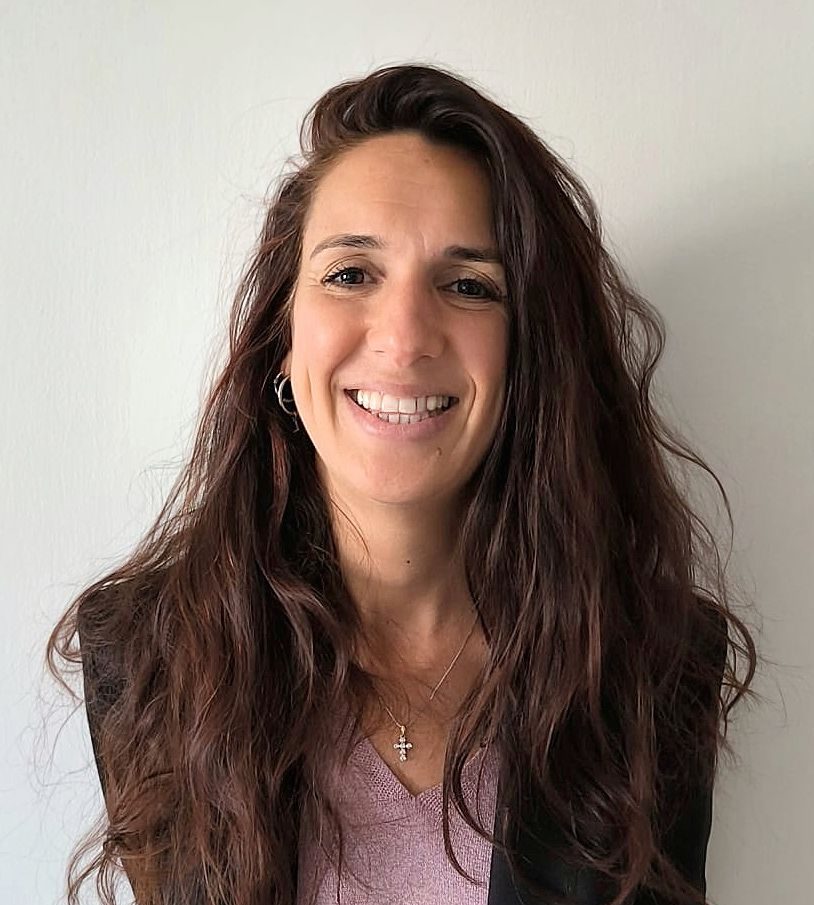
Laura, BNCT expert
Laura Bagnale is a PhD student at University of Campania “L. Vanvitelli”. Her research in the past three years focused on studies for the construction of a Boron Neutron Capture Therapy (BNCT) facility that will be built in Caserta, Italy. The first part of her studies were dedicated to use the Monte Carlo for N-particle (MCNP) simulation code to reproduce the structure of the facility. This part of her work was devoted to simulate the interaction of the neutron beam with the facility materials with the aim to optimize the layout in terms of geometry and compositions, to ensure the structure from the radiation protection point of view to guaratee the safety of the staff, patiens and citizens. She also collaborated to the design of the Beam Shaping Assembly, a key structure to tailor the most effective and safe clinical neutron beam. Another part of her work was to study the BNCT radiobiological effect on tumoral and healthy cells. To reach this objective she joint cell colture irradiation experiments at the laboratory of the University (CIRCE-LAB), which is equipped with a tandem particle accelerator, and she used Geant4-DNA tool to simulate the BNCT mixed field interaction with cells. By modifying the original input file of the “moleculardna” (advanced example of Geant4-DNA), she had the opportunity to model detailed simulations and study the connection between DNA damages and boron micro biodistribution of Boron-10 inside the cell environment, by enanching the data and knowledge in the BNCT.

Effie, GATE10 dosimetry
Eftychia Panagiotarakou holds a Bachelor’s degree in Physics from the University of Patras and is currently pursuing a Master’s in Medical Physics at the same institution. As part of her master’s studies, she is conducting a project (part of her thesis) at the Reactor Institute Delft (TU Delft) through the Erasmus program, focusing on dosimetric investigation into the use of alpha- and beta-emitters for radionuclide therapy. Her academic interests center on medical physics, radiation therapy, and advancing methods that improve the overall quality and safety of clinical practice. With a strong background in physics and a growing specialization in radiation-related medical applications, she looks forward to continuing her professional development, further expanding her academic involvement, and exploring future opportunities in the field.

Kostas, Geant4-DNA microdosimetry
Konstantinos Vasilopoulos obtained a BSc in Physics and currently finishes his MSc studies in Medical and Radiation Physics at the University of Patras. In the Reactor Institute Delft he elaborates his MSc thesis entitled: “The use of moleculardna for the investigation of cellular damage induced by radiation therapy”. He has a strong interest to continue his academic career and his academic interests are about DNA and radiation damage. Except that, he is an Astronomy and Astrophotography enthusiast.